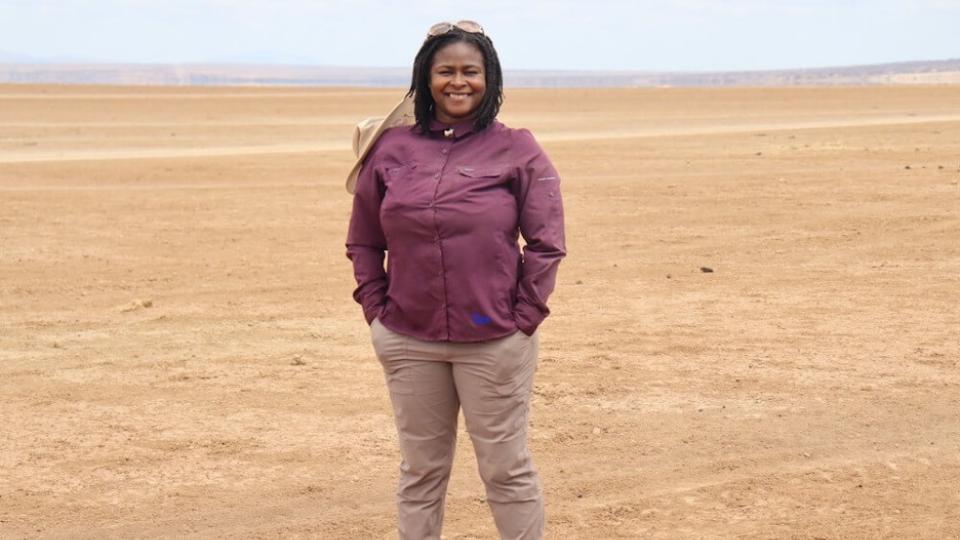
Nyeema Harris Wins 2023 IDEAL Award
Nyeema C. Harris, Knobloch Family Associate Professor of Wildlife and Land Conservation at YSE, was honored by the American Institute of Biological Sciences (AIBS) with the 2023 Inspiring Inclusivity, Diversity, Equity, Acceptance and Learning (IDEAL) Award. The award recognizes commendable leadership in advancing inclusion, diversity, equity, acceptance, accessibility, and learning in the biological sciences community.
“Dr. Harris’ work is tremendously important. We applaud her steadfast dedication both to science and the diverse community of practitioners who are its foundation,” Scott Glisson, CEO of AIBS, said.
Harris’ research explores carnivore behavior and movement and ecology and conservation in urban systems and national parks at a global scale, with ongoing projects throughout the Americas and Africa, specifically. She examines spatial and temporal variations in species interactions, how networks are structured, the ecological consequences of species loss and land-use change, and mechanisms that promote coexistence between carnivores and humans. She directs the Applied Wildlife Ecology (AWE) Lab at YSE, which aims to promote human–wildlife coexistence around the world in urban, agricultural, and protected landscapes while demonstrating a commitment to public engagement and inclusivity. She co-founded the Black Ecologist Section of the Ecological Society of America and recently completed a National Science Foundation-funded project centered on environmental literacy in urban youth in Detroit.
"My approach has always been to operate from a place of integration, where my DEIJ efforts are fundamental in my scholarship, pedagogy, and engagement,” Harris said.
Harris received the award at the AIBS Council of Member Societies and Organizations meeting November 30, 2023. It was presented to her by previous award winner Steward T. A. Pickett, a plant ecologist and senior scientist at the Cary Institute of Ecosystem Studies.
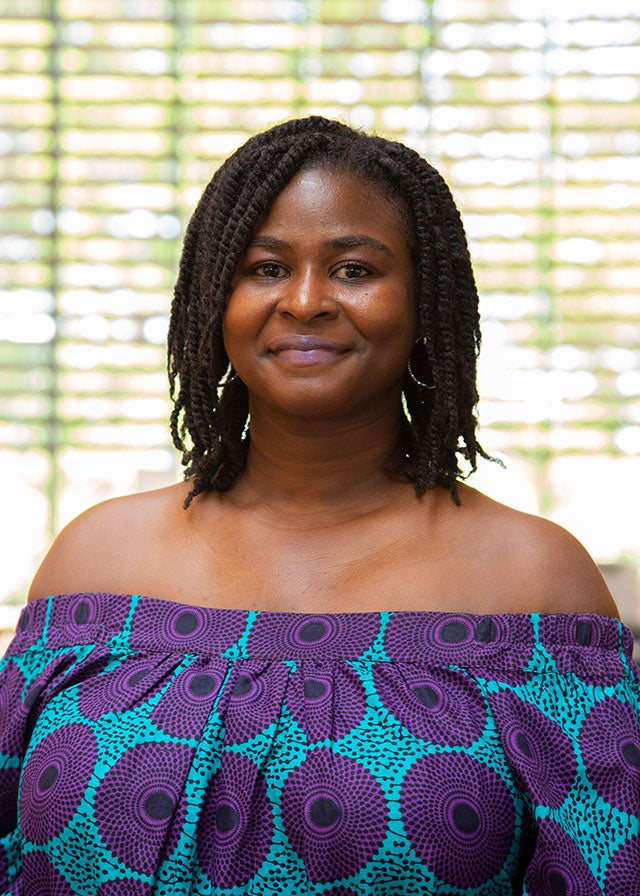
Nyeema Harris
Knobloch Family Associate Professor of Wildlife and Land Conservation
More News in Brief
Former YSE Dean Peter Crane Awarded Darwin-Wallace Medal
Peter Crane, former dean of the Yale School of the Environment (then the School of Forestry and Environmental Studies), has been awarded the Darwin-Wallace Medal for his work in advancing evolutionary biology.
Crane, who served as dean from 2009-2016, was recognized by The Linnean Society of London for his groundbreaking contributions in the field of living and extinct plant diversity. He will receive the medal May 24, 2024, during the anniversary meeting of the society at Burlington House in London. He is one of nine Linnean Society medal and award winners honored for working to protect the natural world.
His research on plant life focuses on understanding plant evolution and the diversification of flower plants. He is co-author of the highly-cited “The Origin and Diversification of Land Plants” and has published more than 200 articles and essays.
“Professor Sir Peter Crane FRS stands as a world leader in evolutionary biology, globally acclaimed for his groundbreaking contributions to the field of plant diversity, both living and extinct. His extensive body of work spans from the origin and fossil history of plant life to its current state, encompassing themes of conservation and practical utility. His palaeobotanical discoveries, combined with phylogenetic analyses of morphological data, have profoundly altered our outlook on early angiosperm evolution,” the society said in a news release.
Crane is currently president of the Oak Spring Garden Foundation and served as director of the Royal Botanic Gardens and Chicago Field Museum.
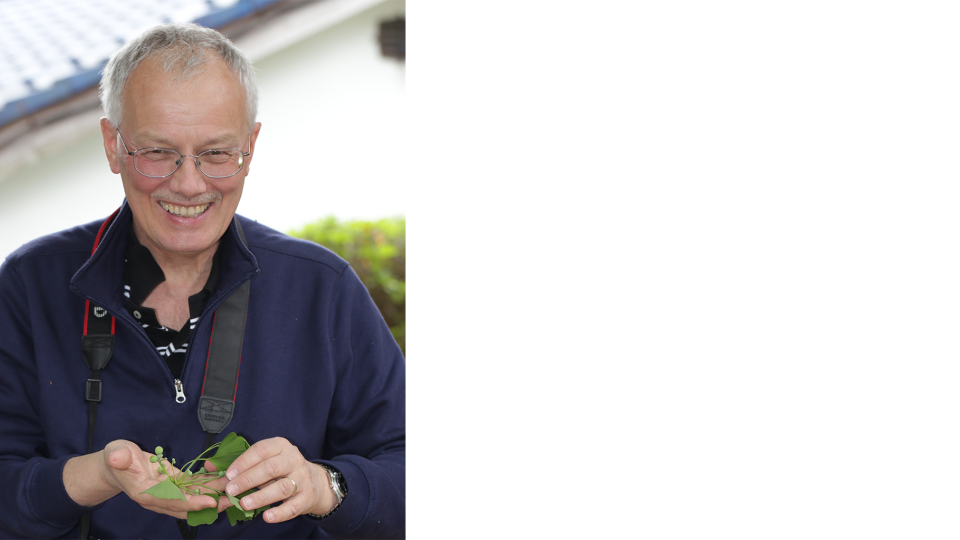
Peter Crane
Two YSE Faculty Members Selected as USC Wrigley Institute 2024 Storymakers
Two Yale School of the Environment scientists were selected to participate in a program that focuses on enabling researchers to share their work through storytelling.
Nyeema Harris, Knobloch Family Associate Professor of Wildlife and Land Conservation, and Narasimha Rao, associate professor of energy systems, and will travel to the Wrigley Marine Science Center on Santa Catalina Island, California, for the USC Wrigley Institute for Environment and Sustainability 2024 Storymaker fellowship this summer. The program aims to help researchers develop new ways of thinking about their research, its place in the world, and how to share it.
“Given the relationship between science communication and professional impact, such training opportunities help academics build their capacity to connect their scholarship with diverse audiences,” Harris said. “I am particularly excited about leveraging the wealth of expertise from leading innovators and engagement specialists to help me develop a new wildlife media project.”
Rao said he is excited to have the opportunity to learn storytelling tools to share his research.
“A lot of my research identifies ways that a clean energy economy can improve lives, reduce inequalities,” Rao said. “I would like to get these messages out to a wider non-academic audience. I am excited that the Storymaker program will help me kickstart this process by teaching me creative communication tools to make my work more widely accessible.” .
Nyeema Harris
Knobloch Family Associate Professor of Wildlife and Land Conservation

Narasimha Rao
Associate Professor of Energy Systems
Kenneth Gillingham Named AAAS Fellow
Kenneth Gillingham, professor of environmental and energy economics, has been elected as a fellow to the American Association for the Advancement of Science (AAAS).
Gillingham, who is senior associate dean of academic affairs at YSE, was recognized for his “distinguished contributions to environmental and energy economics, applying microeconomics, industrial organization, and energy modeling.”
Gillingham is one of six Yale faculty members elected to AAAS. Also elected were Vivian Irish, Daniel C. Eaton Professor of Molecular, Cellular, and Developmental Biology at the School of Medicine; Michael Caplan, C.N.H. Long Professor of Cellular and Molecular Physiology at the School of Medicine; Frederick Sigworth, professor of celullar and molecular physiology and biomedical engineering at the School of Medicine; Claire Bowern, professor of linguistics in the Department of Anthropology; and Claudia Valeggia, professor of anthropology in the Department of Anthropology.
Gillingham’s work draws on the field of applied microeconomics, behavioral economics, industrial organization, and integrated assessment modeling of climate change. He has published widely on consumer decisions and policy in transportation, with a specific focus on the transition to clean energy, including electric vehicles and solar energy. His studies often examine peer influence in adoption of green behaviors.
Previously, Gillingham was a senior economist for energy and the environment at the White House Council of Economic Advisers where he helped craft climate strategy.
“I am immensely honored to be elected an AAAS Fellow, joining an esteemed group of scholars committed to innovative research. AAAS is a crucial organization, with a mandate to provide clear insights from research to policymakers, a goal that I deeply share,” Gillingham said.
He will be honored September 21 in Washington D.C. at the Fellows Forum, which will celebrate the 150th anniversary of the AAAS Fellows program.
The AAAS Fellowship dates back to 1874 and has included some of the nation’s most esteemed scientists, including inventor Thomas Edison, anthropologist Margaret Mead, and biologist James Watson.
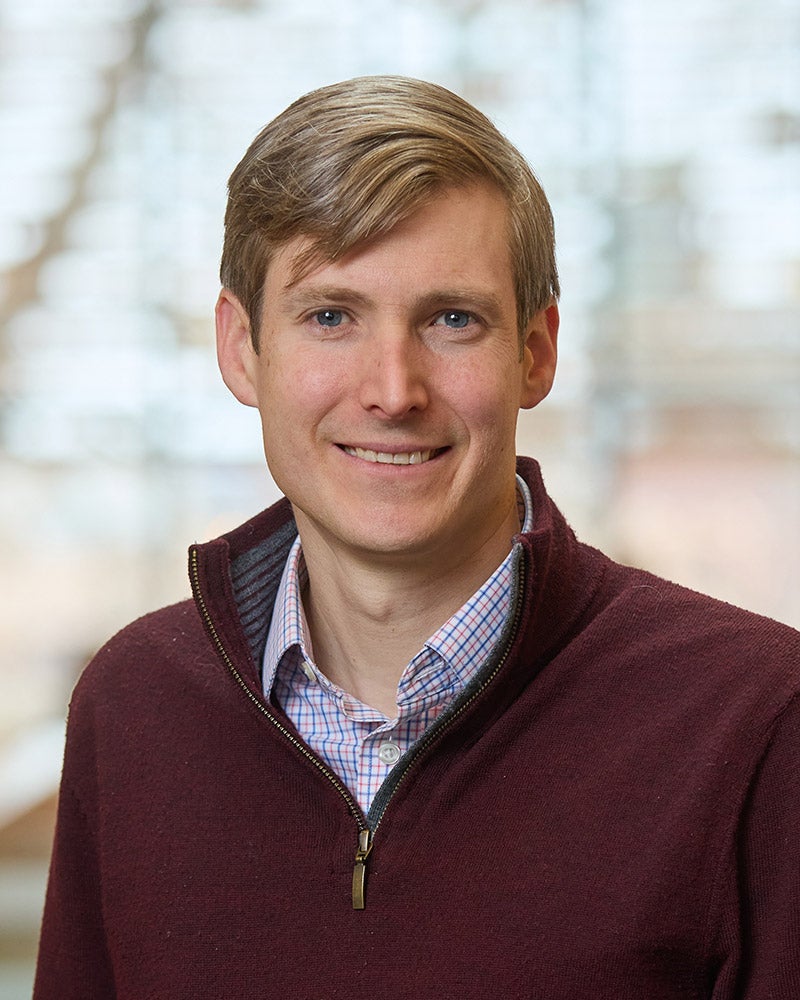
Kenneth Gillingham
Senior Associate Dean of Academic Affairs; Professor of Environmental & Energy Economics