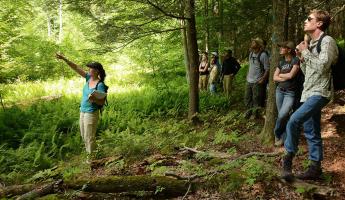
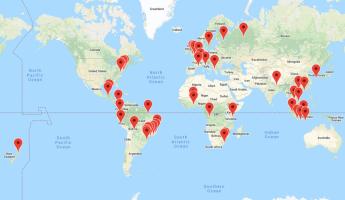
To address environmental issues, society needs a deeper understanding of the natural world, and the ways we can regulate our own behavior. Faculty and students at F&ES conduct research in eight broadly conceived areas of environmental concern – biodiversity, forestry, global climate, industry, law and economics, urban systems, water, and social ecology. The scope of these programs reflects not just the complexity of human interaction with the environment, but the fact that the easy answers have been exhausted. As such, it is the mission of the F&ES faculty and students to conduct research that uncovers new knowledge, unique insights, and approaches that tie many fields together. This mission is further carried out by communicating the results of this research to the widest possible audience through publication, lectures, and other educational programs.

F&ES Research News


Peter Crane, “Ginkgo – the tree that time forgot” - A synoposis of Dean Crane's FES research seminar talk

Dean Sir Peter Crane’s newly released book, “The Tree That Time Forgot,” explores the rich evolutionary and cultural biography of the ginkgo tree through its origin and proliferation across the planet, its near extinction, and its rescue at the hands of people.
 
The book conveys an uplifting story of hope and our relationship to nature. During the presentation, Dean Crane shared an impressive array of images and art inspired by ginkgo trees and leaves. From temple tokens to tattoos and paintings, the ginkgo’s distinctive leaf and bright yellow fall color are a familiar symbol in many cultures, especially in China and Japan. However, the ginkgo is not always revered for its unique characteristics and appearance. Its apricot-like seeds create a strong stench, leading to the removal of female ginkgo trees from residential premises.
 
The ginkgo tree traces its roots to the early Jurassic period in Afghanistan. Its resistance to decay and abundant number of leaves (as many as 300,000) make for good fossils. Through its fossil history, scientists have been able to determine its range and seed distribution. For many years, it had a very restrictive range but broad diversity of species. About 100 million years ago, this diversity declined to only one to two species, which continue to exist in China. The only “wild” populations of these species can be found in the Jinfou and Wes Tianmu Mountain regions in China.
 
Its longstanding presence in China has fostered an important role for the tree in Chinese culture. Many Buddhist shrines can be found at the base of huge Ginkgo trees, often with prayer ribbons attached to the branches. The tree was described in Chinese literature about 1,000 years ago and inspired Japanese family crests over the past 500 to 600 years.
 
By the 1700s, the Ginkgo had reached the Western world through trading with the Dutch and through the East Indian Trading Company. By the end of the 19th century, the Ginkgo became well established in European culture. Today, it remains an important tree along suburban and urban streets and in horticulture. Its unique appearance continues to inspire art and design.
 
The ginkgo has been conserved through cultivation, a technique that can be used to protect plant diversity in the future. Ginkgo trees have a unique reproduction system and can either be male or female. In DC, the majority of female trees were lost – and the oldest, 140 years old, was accidentally cut down. Such events pose threats to its continued existence in our world. Our long-standing history with these trees, and their importance in our culture, calls for a more careful treatment of the ginkgo. We need to begin to think more deeply about our relationship with nature in order to “calibrate the speed of current environmental change” and stand vigilant against the loss of such unique trees like the ginkgo. ~ Stephanie Stefanski

Neighbor to Neighbor Energy Challenge: A Synopsis of Roger Smith's FES Research Seminar talk

Roger Smith

Roger Smith, outreach director for the Neighbor to Neighbor Energy Challenge and co-director of Clean Water Action CT, discussed the challenges of and lessons learned from this program to engage communities in improving home energy efficiency.

In Connecticut, the 64 homes in zip code 06119 emit more annual metric tons of carbon dioxide, on average, than all U.S. users.  Most people in this area, like many others who are used to living in homes with big, empty spaces, feel that there is little they can do to improve the energy efficiency of an “old house.” While different energy audits have been developed through natural gas utility and Connecticut Light & Power to help homeowners reduce energy costs, this “energy marketing” focuses on programs, not solutions. Furthermore, there is low consumer awareness and demand for upgrades. Confusion about energy efficiency further inhibits action beyond small changes in air sealing and lighting.
 
In an effort to address this challenge and implement change on a large-scale, the Neighbor to Neighbor Energy Challenge developed a “Community Based Social Marketing” strategy. This strategy works on the ground level to engage entire communities in taking action and commitments towards cleaner, more efficient home energy. This strategy centers on a personal bond with the community as a means to establish trust and conduct outreach through existing peer and social networks.
 
This pilot initiative received $4.1 million in funding from the Department of Energy to “prove that community based strategies are a cost-effective way to drive demand for residential upgrades” and to “demonstrate that Home Energy Solutions could be marketed as a first step to deeper improvements.” As of 2013, over 100 Connecticut towns now have clean energy commitments, supported by town leadership and engaged residents.
 
The key to success? A multi-disciplinary team and community-driven leadership accompanied by local workshops, presentations, mailings, and door-to-door canvassing. The Neighbor to Neighbor Energy Challenge further distinguishes itself through its innovative campaign centered on fun, engaging, and community-building efforts.
 
In an ongoing effort to monitor and expand the program, the Neighbor to Neighbor Energy Challenge collects survey responses and information from individuals, households, and completed projects. These assessments not only demonstrate the current success of the program, but also provide feedback that can be used in future efforts that model this program. ~ Stephanie Stefanski
 

Estimating the Health Benefits of Reducing Particulate Matter Air Pollution: A Synoposis of Roger D. Peng's FES

Roger D. Peng
 
In this talk, Peng explored the link between small particulate matter (PM) and human health, analyzing the advantages and disadvantages of different study methodologies before presenting the results of his own, intermediate study design.
 
Air pollution study designs range from utilizing ecological, administrative data, which cover a large population and are relatively cheap and easy to acquire, to more targeted challenge studies, which allow the researcher direct control over the level of exposure and produce detailed health outcomes. Air pollution interventions work at the population-level by regulating sources directly (through scrubbers, filters, mpg requirements, etc.). However, these “natural experiments” can take years to have an effect, and it may be difficult to attribute health outcomes to specific regulations.
 
This provoked creative thinking on Peng’s part that led to his primary research question, “Can in-home intervention studies also be used to explore the health effects of PM reduction?” If so, “can we create a ‘real-world challenge’ study?”
 
In-home interventions can act as a microcosm for study by modifying or removing sources of pollution (through gas stove replacements, integrated pest management, air purifiers, and lifestyle changes). Peng’s research explored the effects of a randomized air cleaner intervention study in homes of children with asthma in Baltimore City. The treatment groups received an air cleaner that targeted in-home PM2.5 levels in order to examine the effects of the intervention on the number of symptom-free days. After six months, symptom-free days increased for the treatment group, alongside a significant decrease in PM2.5 levels. These results demonstrate that the intervention had an effect on both pollution and on health.
 
While there are a few complications associated with this study, overall it serves as a starting point for future studies. The results also make a case for using interventions to get the most “bang for your buck” and as replacements or supplements to expensive medication usage. ~ Stephanie Stefanski

Uncertainty and the Social Cost of Carbon: A Synopsis of Professor Richard Howarth's FES Research Seminar talk

The social cost of carbon is an important theme in both environmental economics and climate change policy analysis. The foundation of the concept lies in Pigouvian theory of externalities, in which environmental quality is legally defined as a public trust resource belonging to each and every member of society. Morally, people have a right to protection from environmental harms, in the present day and across generations. Therefore, if damages do occur due to private activities, the public should be able to charge the polluters a fee to compensate for the pollution, such as carbon emissions, imposed on society. This would be the social cost of carbon.

 
The basis for applications of the social cost of carbon in the U.S. is Executive Order 12291, which requires the OMB to evaluate new and revised regulations using cost-benefit analysis. In 2010, a group convened by the Obama administration compared the results of three economic models (DICE, PAGE, and FUND) to determine a central estimate of $21/tonne-CO2e. These models rely on atmospheric models, damage functions, economic models, and energy use. This allows economists to compare the “trade-offs between the short-run benefits of emissions and the long-run damages imposed on the economy.”
 
However, these results were met with critique, as each individual model postulated a significantly different social cost of carbon (as high as $100/tonne-CO2e in the PAGE model). Why are these results so different? The answer lies in the discount rate and in uncertainty. For example, the DICE model is deterministic in that actors behave with certainty regarding the consequences of their current actions on future welfare. In truth, the impacts of climate change are highly uncertain. Rather than rely on the expected costs of these low probability consequences, we should instead incorporate society’s risk aversion to such serious potential environmental impacts.
 
Howarth’s research explores this argument, originally conjectured by Weitzman, through an adapted version of the DICE model. This model incorporates stochasticity, or randomness, and predicts the probability of ‘consumption collapse,’ an extreme climate catastrophe from an economic perspective. Even though the results show that the marginal benefit to society for emissions reductions beyond the first unit of abatement could be very low, the benefit from that first unit of abatement should be very high. By reducing the risk of low-probability, catastrophic events, climate stabilization can generate large net economic benefits.
 
Even though the extent of randomness in climate change makes it difficult to determine one, “true” value for the social cost of carbon, Howarth argues that policymakers should aim at a target that would generate climate stabilization. Across all policy scenarios that achieve this stability in the models, social welfare is nearly the same. Rather than maximizing welfare, we should seek policies that minimize the cost of achieving these targets (for example, the two-degree-Celsius temperature limit established in the Copenhagen Accord).
 
In this DICE model, such a way forward would generate a carbon price that rises over time in the next forty years. Ideally, it would be based on a cap-and-auction system, which would use market mechanisms and incentives to initiate phased emissions reductions. Such an auctioning system would realize Pigou’s goals of compensating the public for the use of public trust resources. ~Stephanie Stefanski

F&ES Seminar Wrapup - Regional growth patterns, recycling, and criticality: Lessons from metal life cycles

Cropped photo
Barbara Reck
In the past 100 years, global metal use has significantly increased while ore quality has been decreasing at an alarming rate. Large, aggregated quantities of metals in easily accessible mines are depleted. Now, our efficiency at metal extraction must increase in order to meet the demand for more metals, and for more types of metals. Advances in modern technology, healthcare, and other fields entail the use of a greater number of elements than ever before. For example, computer chips now require 45 elements, as compared to just 12 elements in the 1980s.
 
As a result, there is a need to systematically analyze the use of all metals and their potential criticality. This need has generated the Criticality Project at Yale’s Center for Industrial Ecology, launched to develop “a workable, defendable methodology for quantitatively assessing the criticality of all metals.” In her presentation, Dr. Reck shared what the project has uncovered about our use and management of metals – and where there is room for improvement.
 
The criticality methodology is built on three dimensions: supply risk, vulnerability to supply restriction, and environmental implications. To better understand these three elements, we need to understand the life cycle of metals. A typical cycle of production, fabrication and manufacturing, use, and recycling and waste management involves over fifty countries in eight world regions.
 
While as much as 63% of nickel, for example, is recycled at the end-of life stage, almost half of the elements in the periodic table are essentially not recycled at all. For many of these common metals, we have had time to develop profitable and efficient recycling methods. Precious metals are also recycled, due to their high value. However, special metals required in modern technology are used in small volume and lack well-developed systems for recycling. Even though they are classified as “rare earth” metals, they are rarely recycled.
 
Why don’t we recycle so many metals? Dr. Reck discusses four explanations: collection, economies of scale, non-functional recycling, and product design. In sum, many of these metals are used in small quantities in very complex products. There are no well-established systems for collecting and efficiently dismantling these products for recycling. Only a few of these metals can be recycled at economies of scale while most are combined with other metals, leading to insufficient separation of these metals for re-use.
 
With such a complex problem, how can we improve end-of-life recycling rates? Dr. Reck offers four key methods: increase collection rates, improve separation, invest in new recycling technologies, and design products for recycling. Not only are there inefficiencies in handling end-of-life metals, but there are also inefficiencies across the entire lifecycle of a metal. For example, nickel’s recycling rate drops to 52% from the original 63% when you consider its entire life cycle, suggesting that there is room for improvement.
 
You can only manage what you can measure, Dr. Reck points out. So comprehensive knowledge of full metal life cycles can “provide valuable information to stakeholders on how to move towards sustainable resource management for metals.” ~Stephanie Stefanski

F&ES Seminar Wrapup - A 21st Century Approach to Energy and Environmental Policy: Connecticut Leading the Way

DanEsty1
Dan Esty
During his Wednesday seminar, Dan Esty, Commissioner of the Connecticut Department of Energy and Environmental Protection, declared that we are at a “watershed” moment in the environmental arena - a difficult but promising moment for change and progress. Budget cuts are imminent and, within the past year, the state of Connecticut has experienced a “taste” of climate change through five catastrophic weather events. Yet there is still potential for innovation and realizing a more sustainable and cleaner future in energy, without sacrificing our standards of living and current energy costs. In this pivotal moment, we can find solutions to our problems, but not by looking to the past.
 
Instead, Esty argues for a few key ways to pave the path for this 21st Century paradigm of resolving our economic and environmental problems. His first goal is to lighten the burden of environmental regulation without lowering standards. Instead of relying on command and control regulation and mandates, he proposes working with businesses and developing economic incentives. Such incentives include “price signals” to ‘signal’ to consumers the most ‘preferable’ choices for society as a whole. This could include raising prices of energy consumption at peak times, especially during hot summer days, in order to reduce overall energy costs.
 
Esty argues that the key role of the government is in deployment support, which will bring to scale innovations while bringing down costs. With government supporting only those projects that can go to market at the lowest cost, it will be logical for the community to implement these energy efficiency improvements.
 
To begin, Connecticut will focus on reducing energy consumption in the “mush market” – municipal buildings, universities, schools, and hospitals. This measure will also include an additional element of more reliable energy. Power outages ran rampant this past year in the midst of extreme weather events. Now, there will be a strong effort to upgrade the entire system to a “smart grid”, with distributed generation and micro-grids. This will allow key buildings, like grocery stores, gas stations, and hospitals, to be connected to the grid but to also separate during a time of crisis, which will help these places maintain power even when the grid at large is down.
 
Esty also states that we need to increasingly use risk as a tool for agenda setting. Rather than dilute our efforts, we need to focus on core concerns by reducing effort, staffing, and funds for other issues. The most critical issues should be selected through a risk-based setting process. By tracking and analyzing our progress, we can see which incentives and efforts are really delivering on their promises.
 
This ambitious, but potentially revolutionary, plan to shift how we address environmental issues, in a way that is both economically and politically appealing, is not the initiative of just one person. It will require the involvement of the entire community to see this change through. It’s up to all of us to make it happen.  ~Stephanie Stefanski

New Publication

Assistant Professor of Economics, Ken Gillingham, along with colleagues from UC Davis, recently published a new paper in Environmental Science & Technology, entitled "Long-Term Shifts in Lifecycle Energy Efficiency and Carbon Intensity".

Dr. Julie Zimmerman named 2013 Women of Innovation Finalist

WomenInnovation

Dr. Julie Zimmerman, Associate Professor of Green Engineering, has been named a 2013 Women of Innovation Finalist for Research Innovation and Leadership.  Overseen by the Connecticut Technology Council, the program recognizes women across Connecticut – those in the workforce and students – who are innovators, role models and leaders in the fields of science, engineering and technology.  Finalists were selected based on their professional experience, history of innovation, ability to think creatively and solve problems, and demonstration of leadership.  The complete list of finalists is available here.

F&ES Seminar Wrapup - Integrity, stability, and beauty: Aldo Leopold’s evolving view of biological invasions

Simberloff2
Dan Simberloff
Dan Simberloff, a Gore Hunger Professor of Environmental Science from the University of Tennessee, discussed Aldo Leopold’s evolving view of biological invasions – from the passing reference in early literature to the more in-depth essays in the Sand County Almanac. Simberloff built the discussion on the earliest examples of invasive species, before diving deeper into the semantics of literature in the early to mid 1900s.
 
Nascent dialogue on invasive species was often built on ‘nativist’ sentiments, utilitarian considerations, and concern for natural aesthetics and stability. Leopold would enigmatically advocate, “native species [are] always preferred,” without giving any specific reasons. In some cases, he saw invasive species as ‘diluting’ natives, therefore threatening human use of these resources. His writings were filled with loaded terminology, referring to plants as “usurpers” of the understory and outright stating that these invaders “[did] not belong.” Yet his aesthetic metaphors added strength to his concerns, poetically presenting a perceived threat of invasive species.
 
In 1931, a meeting with with Charles Elton transformed Leopold’s thinking on invasive species. Although his writing would still retain aesthetic sentiment, he began to explore the ecological and evolutionary impacts of invasive species to a greater extent.  Leopold reflected that, while it may be ideal to not introduce any species, since we ruin the land, only introduced species could survive there. Therefore, some species could actually be ‘useful’ additions to a ruined or ‘deprived’ landscape.  On the other hand, he also argued that native species maintained balance and stability by keeping the “energy circuit” open, whereas invasive species disrupted ecological systems. However, it was not only the ecological disruption that disturbed Leopold but the aesthetic impact on the natural ‘beauty’ of ecosystems and how they ‘should’ function. This land aesthetic went deeper than superficial appearances and referred to the ecological role and evolutionary path of species.
 
Leopold’s understanding of ecology and evolution included the more profound qualities, which led to a deeper aesthetic sense and appreciation. This “land aesthetic”, accompanied by ecological concerns for a systematic meltdown due to the presence of invasive species, informed his views towards invasive species. While he viewed some as useful additions, it seems clear that Leopold became deeply concerned with the implications of invasive species. As he so aptly puts it, “A thing is right when it tends to preserve the integrity, stability, and beauty of the biotic community. It is wrong when it tends otherwise.”   ~Stephanie Stefanski

Dr. Robert Bailis receives UN Foundation funding to lead study on non-renwable biomass in Africa, Asia and Latin America

CleanCookstoves
Geospatial Analysis and Modeling of Non-Renewable Biomass: WISDOM and beyond
This project is a partnership between the Centro de Investigaciones en Geografía Ambiental (CIGA) and Centro de Investigaciones en Ecosistemas (CIEco), both centers within the National Autonomous University of Mexico (UNAM), and Yale School of Forestry and Environmental Studies (FES) with support from the Global Alliance for Clean Cookstoves (GACC). The researchers propose to develop and, in select cases, validate multi-scalar geospatial estimates of the fraction of non-renewable biomass (fNRB) harvested for woodfuel, including firewood and charcoal, at national and sub-national levels in Sub-Saharan Africa, Tropical Asia and Latin America. This will enable clean cookstove and fuel substitution programs to better understand their impact on land use/land cover change and allow for more accurate and consistent accounting of carbon offsets. At the national and regional level, there are large variations in location, method, and volume of biomass harvesting. Country-level estimates based on national statistics cannot capture the geographic specificity of biomass harvesting and may result in incorrect assumptions about the impact of fuelwood on land cover change. In contrast, spatially explicit estimates of fNRB reflect the variability that characterizes woodfuel demand, supply potential and harvesting intensity, but require more complex analyses. Geospatial approaches like the Woodfuel Integrated Supply/Demand Overview Mapping (WISDOM) methodology support strategic planning and prioritize areas for project implementation.  In addition, a multi-scale geospatial approach, starting with a global overview and progressively focusing on smaller, more local scales allows research to be focused where it is most effective.

F&ES Professor, Peter Raymond, co-author on report that shows climate change already having major effects on ecosystems and species

"Plant and animal species are shifting their geographic ranges and the timing of their life events – such as flowering, laying eggs or migrating – at faster rates than researchers documented just a few years ago, according to a technical report on biodiversity and ecosystems used as scientific input for the 2013 Third National Climate Assessment.  The report, Impacts of Climate Change on Biodiversity, Ecosystems, and Ecosystem Services, synthesizes the scientific understanding of the way climate change is affecting ecosystems, ecosystem services and the diversity of species, as well as what strategies might be used by natural resource practitioners to decrease current and future risks. More than 60 federal, academic and other scientists, including the lead authors from the U.S. Geological Survey, the National Wildlife Federation and Arizona State University in Tempe, authored the assessment" [from joint press release by USGS, NWF, and ASU].  Peter Raymond, F&ES Professor of Ecosystem Ecology, served as lead author on Chapter 3 of the report.

New Project Funding: Karen Seto

Title: Understanding Impacts of Desert Urbanization on Climate and Surrounding Environments to Foster Sustainable Cities Using Remote Sensing and Numerical Modeling
 
PI: Soe Myint (ASU), Co-I: Karen Seto (Yale), Huei-Ping Huang (ASU), and Ariane Middel (ASU).
Agency: NASA $765,990.
 
Abstract: While the urban heat island effect is well documented, most evidence is based on cities in temperate areas. Recent work suggests that urban desert areas in the tropics and sub-tropics have the opposite effect--they cool rather than heat the area. The proposed research examines the distribution of urban infrastructure and vegetation in and around sub-tropical desert cities and the effects they have on local and regional climate. The project’s goals are to better understand the impacts of changing land cover spatial distribution, patterns and arrangements within and around these cities in relation to climate change and to use this knowledge to support adaptive management and foster sustainable desert cities. The project will examine five desert city regions: Las Vegas, USA; Beer Sheva, Israel; Jodhpur, India; Kharga, Egypt; and Hetian, China.

F&ES Masters Student, Devin Judge-Lord, receives award for best presentation

Judge Lord Devin
Devin Judge-Lord
The Association for Environmental Studies and Sciences (AESS) recently awarded Devin Judge-Lord, a second-year Master of Environmental Science student at Yale’s School of Forestry & Environmental Studies, the prize for “best student presentation” at the AESS annual conference held during summer 2012.  The AESS is an independent faculty-and-student-based professional association in higher education, which aims to encourage interdisciplinary understanding of environmental science, policy, management, ethics, history, and all of the other vital contributions of traditional disciplines.  Judge-Lord presented an original research paper titled "Politics in Environmental Market Design: interest group participation in water quality trading negotiations," which he wrote for Prof. Ben Cashore’s Governance, Markets, and the Environment (GEM) workshop series.   His paper was selected for praise from dozens of graduate student submissions.  A grant from the Masters Student Travel Fund administered by Gordon Geballe enabled Judge-Lord to travel to the conference, which took place on the grounds of Santa Clara University in California.

F&ES Seminar Wrapup: Impacts of Forests and Land Use on Aerosols and Climate

Unger Nadine
Nadine Unger
Nadine Unger gave a talk entitled “Impacts of Forests and Land Use on Aerosols and Climate” at the F&ES Burke Auditorium on November 7, 2012.  An expert on atmospheric climate, Dr. Unger has been Assistant Professor of Climate Science at Yale’s School of Forestry & Environmental Studies since 2010.  Before that the climatologist studied how different human activities impact climate at NASA’s Goddard Institute for Space Studies in New York City.  Her talk for the F&ES research seminar series discussed new research into how ozone, methane and aerosol particulates and their indirect effect on clouds significantly affect regional and global climate.
 
Carbon dioxide is the most important contributor to human-induced climate change, however climate is also strongly influenced by shorter-lived gases (methane and ozone) and aerosol particulates (sulfate, soot, dust), collectively called short-lived climate forcers (SLCFs) that have complex effects involving both warming and cooling. Carbon dioxide, other long-lived greenhouse gases (GHGs), including nitrous oxide and halocarbons, and the short-lived climate forcers are often linked through common emission sources.  According to Dr. Unger, many of the short-lived climate forcers are associated with other environmental problems, including acid rain and poor air quality. For example, ozone and particulates are known to damage human and ecosystem health and agriculture. 
 
Dr. Unger argued that, to date, the feedbacks from changes in land cover change have not been considered in assessments of historical and future short-lived climate forcers. The lack of information on these changing interactions, which perturb emissions of reactive carbon from vegetation, deposition rates of pollution to ecosystems and the underlying surface albedo, represents a major uncertainty in the ability to assess the climate and air quality benefits of reductions in the short-lived climate forcers.  For this reason, Dr. Unger concludes that land use land change should be considered in future research about the impact of short-lived climate forcers on climate. ~Adina Matisoff

F&ES Seminar Wrapup: Unpacking the idea of community-based conservation: a view from Madagascar

Alison

Alison Richard

Alison Richard gave a talk entitled “Unpacking the idea of community-based conservation: a view from Madagascar” at the F&ES Burke Auditorium on October 17, 2012.  Richard is an expert on the evolution of complex social systems among primates.  She is also the former Vice-Chancellor at the University of Cambridge and Director of the Peabody Museum in New Haven, as well as a long-time professor of anthropology at Yale University.  Prof. Richard’s presentation drew on her experience founding and maintaining the Bezà Mahafaly partnership for conservation, research and training along with researchers from Madagascar and the United States, and local communities in southwest Madagascar.  Her lecture explored the meaning of community in the partnership’s evolution; linkages between community-based activities and national policy and legislation, and the changing mix of constraints and opportunities they represent; and a model for the development of successful community-based conservation initiatives.
 
After nearly three decades dedicated to the Bezà Mahafaly partnership, Prof. Richard has a deep understanding of the social, cultural and political dynamics that exist within community-based partnerships for southwest Madagascar’s forest conservation.  She has found that collaboration is a political, fragile endeavor built on long-term relations of trust between individuals and groups.  Additionally, vertical alignment between community efforts and national policies are helpful to achieve conservation goals, although she believes much can be done on the ground with small projects regardless of policy support.  Finally, going beyond the concept of “adaptive management,” Richard argued that improvisation and opportunism are essential to overcome uncertainties inherent to collaborative conservation efforts.  Using these lessons, Prof. Richard and her team will continue to pursue sustainable forest conservation and to engage new generations of local Malagasies to become stewards of Madagascar’s rich biodiversity.  ~Adina Matisoff

F&ES Seminar Wrapup: The Future of Seawater Desalination: Energy, Technology, and the Environment

Meny Elimelech photo
Menachem Elimelech
Professor Menachem Elimelech gave a talk entitled “The Future of Seawater Desalination: Energy, Technology and the Environment” at the F&ES Burke Auditorium on October 10, 2012.  Elimelech is the director of Yale’s environmental engineering program, which he founded in 1998.  In that time he has authored more than 200 refereed journal articles, served on the editorial advisory board of multiple publications and received distinguished prizes and appointments.  His talk focused on seawater desalination as a means to address water scarcity, which he said is one of the greatest crises that the world currently faces.  Prof. Elimelech’s presentation discussed the energy efficiency, state of technology and environmental challenges of seawater desalination.
 
Prof. Elimelech argued that despite major advances in desalination technology, the production of freshwater by seawater desalination remains highly energy-intensive.  In terms of greenhouse gas emissions, the seawater desalination process is equivalent to adding “hundreds of thousands of cars to the road.”  Focusing on the development of new materials and innovative technologies to improve energy-efficiency in the desalination process, Prof. Elimelech argued that real gains could be made to advance desalination technology through the use of nano materials.  In particular, his studies show that nano materials limit the degradation of membranes through which saltwater must pass during the reverse osmosis process.  Also, they make it possible to eliminate the use of some harsh chemicals that damage crops when desalinized water is used for agricultural purposes.  Prof. Elimelech concluded that seawater desalination might not be an appropriate technology for all countries, such as South Korea, although it is an essential component of addressing global water scarcity.  In some cases, such as Israel and other Middle Eastern countries, Prof. Elimelech believes desalination is the only option for increasing freshwater quantity.  ~Adina Matisoff

F&ES Seminar Wrapup: From Wilderness to Large Landscape Conservation

jamie williams
Jamie Williams - President, The Wilderness Society
Jamie Williams (Yale B.A. ’85, M.E.S. ’89) gave a talk entitled “From Wilderness to Large Landscape Conservation” at the F&ES Burke Auditorium on October 3, 2012.  Williams is a Yale alumnus, life-long conservationist, and recently appointed president of The Wilderness Society.  Williams’ presentation to the F&ES community traced his own conservation work from his days researching local efforts to protect the Farmington River in Connecticut while a student at Yale University, to his 19 years overseeing conservation efforts in Colorado and Montana, to his recent move to Washington, DC where he has assumed a leadership role in the national conservation movement.  Using examples of past land conservation efforts in which he was involved, Williams underscored several important aspects of successful land protection efforts, including: working in collaboration with diverse constituencies at the local level; creating large-scale and interconnected landscape conservation as a means to sustain ecosystems in the long-term instead of focusing on individual species; and acquiring and managing large protected areas through public-private partnerships.  According to Williams, to date the U.S. government has established 750 protected areas covering 18 million acres of land.
 
Williams concluded his talk with a discussion of recent trends in the conservation movement and strategies that The Wilderness Society and other conservation organizations are using to create sustainable protected areas.  In particular, Williams stressed The Wilderness Society’s focus on science-based and economic research to identify key protection targets and methods as a means of responding to climate change impacts.  For example, he explained that The Wilderness Society works with the U.S. Department of the Interior to create new models to address energy issues, including supporting the development of renewable resources in harmony with the environment.  Williams noted that “interest and demand for wild places remains strong” in the United States.  He stated that the great challenge of The Wilderness Society and the conservation movement is to broaden the constituency of environmental stewards within a country that is increasingly urban.  His organization seeks to build sustainable societies that recognize the human connection to wild places.  He asserts that this human bond to nature is greater than the quantification and monetization of natural resources or the protection of animal species.  People’s experience of nature also holds intangible value to the human spirit.   ~Adina Matisoff

F&ES Doctoral Student, Amy Zhang, receives funding for dissertation research in China

Doctoral student, Amy Zhang (Advisor: Michael Dove), has been awarded an NSF Doctoral Dissertation Research Improvement Grant (DDRIG) by both the Cultural Anthropology Program and the Science, Technology and Society Program for her dissertation fieldwork on waste, urbanization and urban ecology in China. She was also awarded a Social Science Research Council - International Development Research Fellowship (SSRC - IDRF) and a Wenner-Gren Foundation for Anthropological Research Doctoral Dissertation Fellowship. Amy will be under-taking this research for the next 18 months in China.

Recent Nature paper includes F&ES alumni in team of scientists

Many of the world’s tropical protected areas are struggling to sustain their biodiversity, according to a study by more than 200 scientists from around the world published in Nature.  Several of the co-authors are F&ES alumni, including current faculty member Mark Ashton (MF '85, PhD '90), Patrick Baker (MF '93, PhD '01 with Chad Oliver at U. Washington), Uromi Goodale (MFS '01, PhD '09) and Richard Carroll (MFS '85, PhD '97).

Lead by Professor William Laurance, from James Cook University and the Smithsonian Tropical Research Institute in Panama, the team studied more than 30 different categories of species—from trees and butterflies to primates and large predators—within protected areas across the tropical Americas, Africa and Asia-Pacific.  The team found that about half the protected areas suffered an "erosion of biodiversity" over the last 20-30 years, as a result of habitat disruption, hunting and forest-product exploitation. They also found that the disruption of habitat surrounding the reserves was almost as important what was going on inside in determining the health of the reserve.

MEM Student, Lauren Graham, pilots game to prevent malaria in Kenya

MEM student, Lauren Graham, writes about her summer work in Kenya in the AlertNet - Climate Conversations blog. Lauren co-created the game, Humans vs. Mosquitos, to aid in the fight against mosquito borne diseases, demonstrating the connection between climate change, mosquitoes and human health.  Lauren is specifically working to adapt the focus of the game from dengue fever to malaria, piloting the game throughout Kenya's malarian-prone regions, while also interviewing health workers and communities affected by malaria.  The hope is for the game to fit directly into Kenya’s national malaria prevention strategy.

American Meterological Society logo

F&ES Doctoral Student, Lei Zhao, wins Student Presentation Competition

Congratulations to Lei Zhao, whose presentation “Correcting Surface Solar Radiation Modeled by two Data Assimilation Systems for Micrometeorological Research” has been selected as a winner of the American Meterological Society's 30th Agricultural and Forest Meteorology/First Atmospheric Biogeosciences Conference Student Presentation Competition! The competition took place during the conferences held in Boston, MA on 29 May – 1 June, 2012. Lei is a FES doctoral student working with Xuhui Lee.
Book Cover: Managing Forest Carbon in a Changing Climate

Recent Book Release

Managing Forest Carbon in a Changing Climate
Editors: Mark Ashton, Mary Tyrrell, Deborah Spalding, and Bradford Gentry


Forests are critical to mitigating the effects of global climate change because they are large storehouses of carbon, but there are significant uncertainties about the actual behavior of many of their sinks and sources, according to arecently published textbook, Managing Forest Carbon in a Changing Climate.

The book, written by researchers at the Yale School of Forestry & Environmental Studies, is a comprehensive review of the science of carbon sequestration in forests, management of forests for carbon mitigation and poverty alleviation, and the socioeconomic and policy implications of managing forests for carbon. Read more

Managing Forest Carbon in a Changing Climate grew out of a series of seminars that were organized by faulty, students and alumni of the Yale School of Forestry & Environmental Studies. The book is published by Springer and can be read online.

New Publications from F&ES Faculty, Staff and Students

March 2013

Baka, J. 2013. The Political Construction of Wasteland: Governmentality, Land Acquisition and Social Inequality in South India. Development & Change 44(2): 409-428.
 
Balog, A. and O.J. Schmitz. 2013. Predation drives stable coexistence ratios between red and green pea aphid morphs. Journal of Evolutionary Biology 26(3): 545-552.

Clark DA, C Meek, J Cheechoo, S Clark, AL Foote, D Lee, G York, 2013. Polar bears and CITES: A rejoinder to Parsons and Cornick. Marine Policy 38, pp. 365-368.
 
Fujita R, JH Moxley, H DeBey* (FES Alum), et al., 2013. Managing for a resilient ocean. Marine Policy 38, pp. 538-544.

Graef, D.J. 2013. Negotiating Environmental Sovereignty in Costa Rica. Development & Change 44 (2): 285 - 307. 
 
Lifset R and M Eckelman, 2013. Material efficiency in a multi-material world. Philosophical Transactions of the Royal Society 371(1986), 2010002.

Naesset, E., … , T.G. Gregoire, et al. 2013. Comparison of precision of biomass estimates in regional field sample surveys and airborne LiDAR-assisted surveys in Hedmark County, Norway. Remote Sensing of Environment 130: 108-120. 
 
Nasiri, F., T. Savage*, R. Wang, N. Barawid, J.B. Zimmerman. 2013. A system dynamics approach for urban water reuse planning: a case study from the Great Lakes region. Stochastic Environmental Research and Risk Assessment 27(3): 675-691.
 
Son JY and ML Bell, 2013. The relationships between short-term exposure to particulate matter and mortality in Korea: Impact of particulate matter exposure metrics for sub-daily exposures. Environmental Research Letters 8(1), 014015.

February 2013

Richards-Hrdlicka, K.L., et al. 2013. First survey for the amphibian chytrid fungus Batrachochytrium dendrobatidis in Connecticut (USA) finds widespread prevalence. Diseases of Aquatic Organisms 102(3): 169-180.

Twining CW* (FES Alum) and DM Post, 2013. Cladoceran remains r eveal presence of a keystone size-selective planktivore. Journal of Paleolimnology 49(2), pp. 253-266.
 
Yeh S, GS Mishra, G Morrison, J Teter, R Quiceno, K Gillingham, X Riera-Palou, 2013. Long-Term Shifts in Life-Cycle Energy Efficiency and Carbon Intensity. Environ. Sci. Technol.
 

January 2013

Collins JR, PA Raymond, WF Bohlen, MM Howard-Strobel, 2013. Estimates of New and Total Productivity in Central Long Island Sound from In Situ Measurements of Nitrate and Dissolved Oxygen. Estuaries and Coasts 36(1), pp. 74-97.
 
Fenichel EP, B Gentner, R Arlinghaus, 2013. Normative considerations for recreational fishery management: a bioeconomic framework for linking positive science and normative fisheries policy decisions. Fisheries Management and Ecology (in press).  

Gan JB and B Cashore, 2013. Opportunities and Challenges for Integrating Bioenergy into Sustainable Forest Management Certification Programs. Journal of Forestry 111(1), pp. 11-16.
 
Gillingham K, MJ Kotchen, DS Rapson, G Wagner, 2013. Energy policy: the rebound effect is overplayed. Nature 493, pp. 475-476.

Kemp AC, et al., 2013. Modern Salt-Marsh and Tidal-Flat Foraminifera from Sitkinak and Simeonof Islands, Southwestern Alaska. The Journal of Foraminiferal Research 43(1), pp. 88-98.
 
Kukrety S, P Dwivedi, S Jose, JRR Alavalapati, 2013. Stakeholders' perceptions on developing sustainable Red Sanders (Pterocarpus santalinus L.) wood trade in Andhra Pradesh, India. Forest Policy and Economics 26, pp. 43-53.
 
Lauerwald R, J Hartmann, N Moosdorf, S Kempe, PA Raymond, 2013. What controls the spatial patterns of the riverine carbonate system? – A case study for North America. Chemical Geology 337-338, pp. 114-127.
 
Naesset E, OM Bollandsas, T Gobakken, TG Gregoire, G Stahl, 2013. Model-assisted estimation of change in forest biomass over an 11 year period in a sample survey supported by airborne LiDAR: A case study with post-stratification to provide “activity data”. Remote Sensing of Environment 128(21), pp. 299-314.
 
Riggio J, A Jacobson, L Dollar, …, L Lichtenfeld, et al., 2013. The size of savannah Africa: a lion’s (Panthera leo) view. Biodiversity and Conservation 22(1), pp. 17-35.

Smith N and H Joffe, 2013. How the public engages with global warming: A social representations approach. Public Understanding of Science 22(1), pp. 16-32.

December 2012

Special issue of Journal of Industrial Ecology on Sustainable Urban Systems. Journal of Industrial Ecology 16(6), pp. 775-15.  
 
Bell ML and K Ebisu, 2012. Environmental Inequality in Exposures to Airborne Particulate Matter Components in the United States. Environmental Health Perspectives 120(12), pp. 1699-1704.
 
Bollinger B, K Gillingham, 2012. Peer Effects in the Diffusion of Solar Photovoltaic Panels. Marketing Science 31(6), pp. 900-912.
 
Carraro C and E Massetti, 2012. Energy and climate change in China. Environment and Development Economics 17, pp. 689-713.
 
*Chan N and B Stone Jr., 2012. The City and the Coming Climate: Climate Change in the Places We Live. Journal of Regional Science 52(5), pp. 884-885.
 
Ebisu K and ML Bell, 2012. Airborne PM2.5 Chemical Components and Low Birth Weight in the Northeastern and Mid-Atlantic Regions of the United States. Environmental Health Perspectives 120(12), pp. 1746-1752.
 
Güneralp B, MK Reilly, KC Seto, 2012. Capturing multiscalar feedbacks in urban land change: a coupled systems dynamics spatial logistic approach. Environment and Planning B 39(5), pp. 858-879.
 
Harrington W, R Morgenstern, JS Shih, ML Bell, 2012. Did the Clean Air Act Amendments of 1990 really improve air quality? Air Quality, Atmosphere & Health 5(4), pp. 353-367.
 
Ingwell LL, M Miller-Pierce, T Trotter III, EL Preisser, 2012. Vegetation and Invertebrate Community Response to Eastern Hemlock Decline in Southern New England. Northeastern Naturalist 19(4), pp. 541-558.
 
*Jiang Li, X Deng, KC Seto, 2012. Multi-level modeling of urban expansion and cultivated land conversion for urban hotspot counties in China. Landscape and Urban Planning 108(2-4), pp. 131-139.
 
*Kala N, P Kurukulasuriya, R Mendelsohn, 2012. The impact of climate change on agro-ecological zones: evidence from Africa. Environment and Development Economics 17, pp. 663-687.
 
Kalimo H, R Lifset, C van Rossem, L van Wassenhove, A Atasu, K Mayers. 2012. Greening the economy through design incentives: Allocating extended producer responsibility. European Energy and Environmental Law Review 21(6), pp. 274-305.
 
Kostal J, A Voutchkova-Kostal, B Weeks, JB Zimmerman, PT Anastas, 2012. A Free Energy Approach to the Prediction of Olefin and Epoxide Mutagenicity and Carcinogenicity. Chemical Research in Toxicology 25(12), pp. 2780-2787.
 
Kramer TD, RJ Warren, Y Tang, MA Bradford, 2012. Grass Invasions Across a Regional Gradient are Associated with Declines in Belowground Carbon Pools. Ecosystems 15(8), pp. 12761-1282.
 
Lozano R, M Naghavi, K Foreman, S Lim, …, ML Bell, et al., 2012-2013. Global and regional mortality from 235 causes of death for 20 age groups in 1990 and 2010: a systematic analysis for the Global Burden of Disease Study 2010. The Lancet 380(9859), pp. 2095-2128.
 
Lim SS, T Vos, AD Flaxman, …, ML Bell, et al., 2012-2013. A comparative risk assessment of burden of disease and injury attributable to 67 risk factors and risk factor clusters in 21 regions, 1990–2010: a systematic analysis for the Global Burden of Disease Study 2010. The Lancet 380(9859), pp. 2224-2260.
 
Mattson DJ, SG Clark, 2012. The discourses of incidents: cougars on Mt. Elden and in Sabino Canyon, Arizona. Policy Sciences 45(4), pp. 315-343.
 
Matus KJM, WC Clark, PT Anastas, JB Zimmerman, 2012. Barriers to the Implementation of Green Chemistry in the United States. Environmental Science & Technology 46(20), pp. 10892-10899.
 
Naro-Maciel E, AC Vigliar Bondioli, *M Martin, et al., 2012. The Interplay of Homing and Dispersal in Green Turtles: A Focus on the Southwestern Atlantic. Journal of Heredity 103(6), pp. 792-805.
 
*Ramirez S (FES Alum), P Dwivedi, R Bailis, A Ghilardi, 2012. Perceptions of stakeholders about nontraditional cookstoves in Honduras. Environmental Research Letters 7(4), 044036.
 
Saiers JE, *E Barth, 2012. Potential Contaminant Pathways from Hydraulically Fractured Shale Aquifers. Ground water 50(6), pp. 826-828.
 
Seitzinger SP, U Svedin, CL Crumley, …, KC Seto, et al., 2012. Planetary Stewardship in an Urbanizing World: Beyond City Limits. Ambio 41(8), pp. 787-794.
 
Tang Y, RJ Warren, TD Kramer, MA Bradford, 2012. Plant invasion impacts on arthropod abundance, diversity and feeding consistent across environmental and geographic gradients. Biological Invasions 14(12), pp. 2625-2637.
 
Tank SE, PA Raymond, et al., 2012. A land-to-ocean perspective on the magnitude, source and implication of DIC flux from major Arctic rivers to the Arctic Ocean. Global Biogeochemical Cycles 26, GB4018.
 
Visseren-Hamakers IJ, C McDermott, MJ Vijge, B Cashore, 2012. Trade-offs, co-benefits and safeguards: current debates on the breadth of REDD+. Current Opinion in Environmental Sustainability 4(6), pp. 646-653.

November 2012

Butler BJ, PF Catanzaro, JL Greene, JH Hewes, MA Kolgore, DB Kittredge, Z Ma, ML Tyrrell, 2012. Taxing Family Forest Owners: Implications of Federal and State Policies in the United States. Journal of Forestry 110(7), pp. 371-380.
 
Butman D, PA Raymond, K Butler, G Aiken, 2012. Relationships between Delta C-14 and the molecular quality of dissolved organic carbon in rivers draining to the coast from the conterminous United States. Global Biogeochemical Cycles 26, GB4014.
 
Carraro C, A Favero, E Massetti, 2012. Investments and public finance in a green, low carbon, economy. Energy Economics 34(1), pp. S15-S28.
 
Cote I, PT Anastas, et al., 2012. Advancing the Next Generation of Health Risk Assessment. Environmental Health Perspective 120(11), pp. 1499-1502.
 
Crowther TW, L. Boddy, H.T. Jones, 2012. Functional and ecological consequences of saprotrophic fungus-grazer interactions. ISME Journal 6(11), pp. 1992-2001.
 
Grubler A, 2012. Energy transitions research: Insights and cautionary tales. Energy Policy 50, pp. 8-16.  
 
Wilson C, A Grubler, KS Gallagher, GF Nemet, 2012. Marginalization of end-use technologies in energy innovation for climate protection. Nature Climate Change 2(11), pp. 780-788.
 
Zarnetske JP, et al., 2012. Coupled transport and reaction kinetics control the nitrate source-sink function of hyporheic zones. Water Resources Research 48(11), W11508.

October 2012

Amon RMW, AJ Rinehart, S Duan, …, PA Raymond, et al., 2012. Dissolved organic matter sources in large Arctic rivers. Geochemica et Cosmochimica Acta 94(1), pp. 217-237.
 
Anderson GB, JR Krall, RD Peng, ML Bell, 2012. Is the Relation Between Ozone and Mortality Confounded by Chemical Components of Particulate Matter? Analysis of 7 Components in 57 US Communities. American Journal of Epidemiology 176(8), pp. 726-732.
 
Bell ML, K Belanger, 2012. Review of research on residential mobility during pregnancy: consequences for assessment of prenatal environmental exposures. Journal of Exposure Science and Environmental Epidemiology 22(5), pp. 429-438.
 
Bradford MA, SA Wood, FT Maestre, JF Reynolds, RJ Warren, 2012. Contingency in ecosystem but not plant community response to multiple global change factors. New Phytologist 196(2), pp. 462-471. 
 
Bradford MA, MS Strickland, JL DeVore, JC Maerz, 2012. Root carbon flow from an invasive plant to belowground foodwebs. Plant and Soil 359(1-2), pp. 233-244.

Geer LA, J Weedon, ML Bell. 2012. Ambient air pollution and term birth weight in Texas from 1998-2004Journal of the Air and Waste Management Association 62(11), pp. 1285-1295.
 
Kemp A, BP Horton, DR Vann, SE Engelhart, CAG Pre, CH Vane, D Nikitina, SC Anisfeld, 2012. Quantitative vertical zonation of salt-marsh foraminifera for reconstructing former sea level, an example from New Jersey, USA. Quaternary Science Reviews 54(SI), pp. 26-39.
 
Kemp A, CK Sommerfield, CH Vane, BP Horton, S Chenery, SC Anisfeld, D Nikitina, 2012. Use of lead isotopes for developing chronologies in recent salt-marsh sediments. Quaternary Geochronology 12, pp. 40-49.
 
Lee HJ, BA Coull, ML Bell, P Koutrakis, 2012. Use of satellite-based aerosol optical depth and spatial clustering to predict ambient PM2.5 concentrations. Environmental Research 118, pp. 8-15.
 
Lee X, JP Huang, EG Patton, 2012. A Large-Eddy Simulation Study of Water Vapour and Carbon Dioxide Isotopes in the Atmospheric Boundary Layer. Boundary-Layer Meteorology 145(1), pp. 229-248. 
 
Leroux SJ, D Hawlena, OJ Schmitz, 2012. Predation risk, stoichiometric plasticity and ecosystem elemental cycling. Proceedings of the Royal Society B Biological Sciences 279 (1745), pp. 4183-4191.
 
Leslie AB, JM Beaulieu, HS Rai, P Crane, et al., 2012. Hemisphere-scale differences in conifer evolutionary dynamics. Proceedings of the National Academy of Sciences of the United States of America 109(40), pp. 16217-16221.
 
Matus KJM, WC Clark, PT Anastas, JB Zimmerman, 2012. Barriers to the Implementation of Green Chemistry in the United States. Environmental Science & Technology 46(20), pp. 10892 – 10899.
 
Meyer RS, *AE DuVal (FES Alum), H.R. Jensen, 2012. Patterns and processes in crop domestication: an historical review and quantitative analysis of 203 global food crops. New Phytologist 196(1), pp. 29-48.
 
*Richards-Hrdlicka KL, 2012. Extracting the amphibian chytrid fungus from formalin-fixed specimens. Methods in Ecology and Evolution 3(5), pp. 843-849.
 
Seto KC, B Gueneralp, LR Hutyra, 2012. Global forecasts of urban expansion to 2030 and direct impacts on biodiversity and carbon pools. Proceedings of the National Academy of Sciences of the United States of America 109(40), pp. 16083-16088.
 
Walker MJC, M Berkelhammer, … H Weiss, 2012. Formal subdivision of the Holocene Series/Epoch: a Discussion Paper by a Working Group of INTIMATE (Integration of ice-core, marine and terrestrial records) and the Subcommission on Quaternary Stratigraphy (International Commission on Stratigraphy). Journal of Quaternary Science 27(7), pp. 649-659.

[Book Chapter]
Thurston GD, ML Bell, 2012. Aerosols, Global Climate, and the Human Health Co-Benefits of Climate Change Mitigation. Chap. 13 in Aerosols Handbook: Measurement, Dosimetry, and Health Effects, Second Edition. LS Ruzer, NH Harley (Eds). Taylor and Francis: Boca Rotan, FL.
* Denotes FES Student author.